
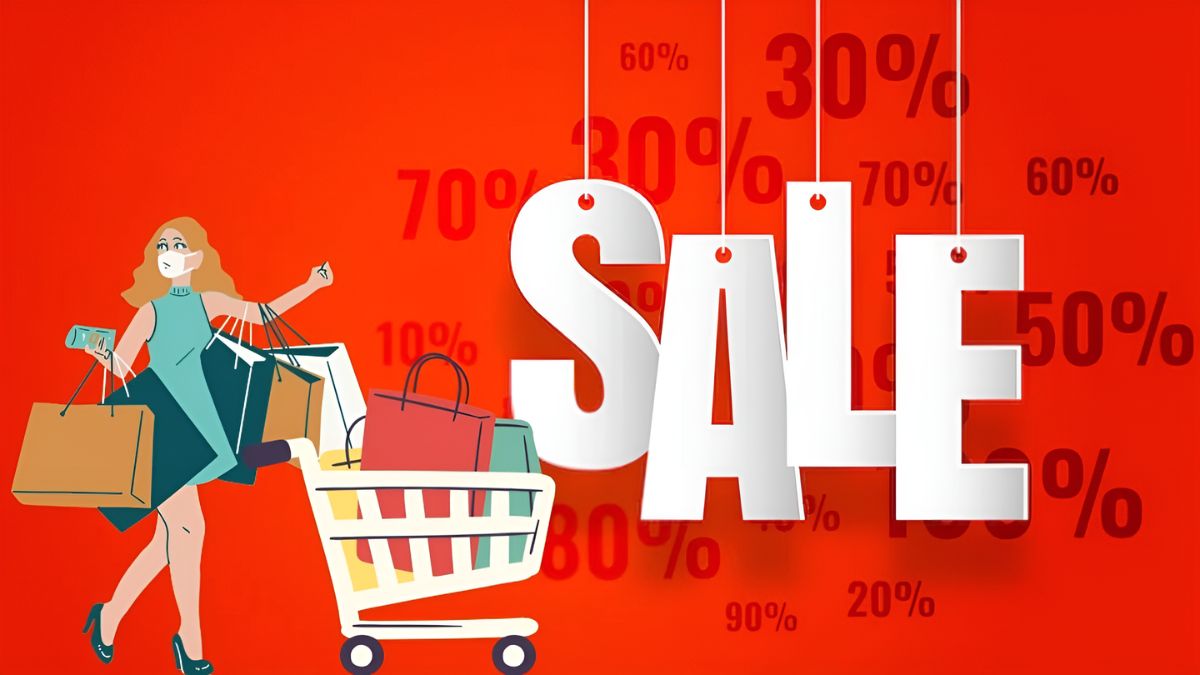
Why Do Discounts Make People Buy More?
In modern markets, discounts are not merely tools to reduce prices – they are strategic mechanisms designed to influence consumer behavior. While many consumers believe discounts help them save money, real-world purchasing patterns suggest otherwise. Instead of minimizing spending, discounts frequently encourage individuals to buy more than initially planned. This raises a critical question: Why do discounts lead to increased consumption?
- The Illusion of Saving and Perceived Value
One of the most significant effects of discounts lies in how consumers perceive value. Rather than focusing on the actual amount spent, individuals tend to evaluate the difference between the original and discounted prices. A product reduced from $100 to $60 creates a sense of gaining $40, even though $60 is still being spent.
This reflects a key concept in Microeconomics: consumers do not always make decisions based on absolute value, but on perceived utility. As a result, discounts shift attention away from cost and toward perceived benefit, making purchases feel more justified – even when they are unnecessary.
- Psychological Pressure: Urgency and FOMO
Discount strategies are often combined with time-sensitive elements such as “limited-time offers” or “only a few items left.” These signals create urgency and trigger the fear of missing out (FOMO), pushing consumers to make faster decisions.
From the perspective of Behavioral Economics, this behavior demonstrates that consumers are not fully rational. Instead of carefully evaluating whether a purchase is necessary, individuals are influenced by emotional responses and social pressure. Consequently, urgency reduces critical thinking and increases impulsive buying.
- Anchoring and Overconsumption
Another key mechanism is the anchoring effect, where the original price serves as a reference point. When consumers see a product discounted from $80 to $40, the lower price appears significantly more attractive – even if the product’s intrinsic value remains unchanged.
In addition, promotional strategies such as “Buy 2 Get 1 Free” or “Spend more to save more” further encourage overconsumption. These offers are designed to increase the quantity of goods purchased rather than reduce overall spending. As a result, consumers often exceed their initial budget in an attempt to maximize perceived savings.
This hihlights a broader implication: discounts do not simply influence individual choices but actively reshape consumption patterns in the market. Discounts are not just pricing tools – they are behavioral mechanisms that redefine how consumers perceive value, urgency, and spending. By creating the illusion of saving, triggering psychological pressure, and encouraging overconsumption, discounts often lead to higher overall expenditure rather than true financial benefit.
Ultimatey, what appears to be a smart financial decision may, in reality, be a carefully designed incentive to spend more.